How to Receive Constructive Criticism Without Taking It Personally: Your Ultimate Guide
Picture this highly relatable scenario. You have just spent hours, maybe even entirely sleepless nights, pouring your heart and soul into a major project at work. You hit submit with a triumphant smile, fully expecting a glorious shower of praise from your manager or your top client. Instead, you receive an email filled with completely unexpected notes, heavy revisions, and numerous suggestions for improvement. Suddenly, your stomach drops to the floor. Your face feels incredibly hot. You feel a sudden and overwhelming urge to fiercely defend your honor, or perhaps you just want to crawl under your desk and never emerge again. If this sounds familiar, take a deep breath. You are experiencing a perfectly normal human reaction. Learning how to receive constructive criticism without taking it personally is easily one of the most challenging skills to master in any career, but it is also unequivocally one of the most rewarding. In the vast realm of professional growth and personal development, receiving feedback at work is the absolute ultimate cheat code. However, unlocking that valuable cheat code requires us to carefully bypass our own fragile ego and complex emotional defenses. Today, we are going incredibly deep into the art of accepting workplace feedback gracefully. We will thoroughly explore why it stings so terribly, how to brilliantly reevaluate your mindset, and exactly what to say when you are put on the spot. Grab a fresh cup of coffee, get incredibly comfortable, and let us dive right into this essential career survival guide.
How to Receive Constructive Criticism Without Taking It Personally: Your Ultimate Guide
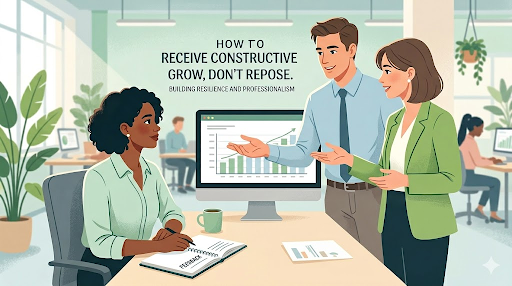
Picture this highly relatable scenario. You have just spent hours, maybe even entirely sleepless nights, pouring your heart and soul into a major project at work. You hit submit with a triumphant smile, fully expecting a glorious shower of praise from your manager or your top client. Instead, you receive an email filled with completely unexpected notes, heavy revisions, and numerous suggestions for improvement. Suddenly, your stomach drops to the floor. Your face feels incredibly hot. You feel a sudden and overwhelming urge to fiercely defend your honor, or perhaps you just want to crawl under your desk and never emerge again.
If this sounds familiar, take a deep breath. You are experiencing a perfectly normal human reaction. Learning how to receive constructive criticism without taking it personally is easily one of the most challenging skills to master in any career, but it is also unequivocally one of the most rewarding. In the vast realm of professional growth and personal development, receiving feedback at work is the absolute ultimate cheat code. However, unlocking that valuable cheat code requires us to carefully bypass our own fragile ego and complex emotional defenses.
Today, we are going incredibly deep into the art of accepting workplace feedback gracefully. We will thoroughly explore why it stings so terribly, how to brilliantly reevaluate your mindset, and exactly what to say when you are put on the spot. Grab a fresh cup of coffee, get incredibly comfortable, and let us dive right into this essential career survival guide.
What Is Constructive Criticism Anyway?
Before we dive into the deep psychological strategies for accepting constructive criticism, we must definitively answer a very popular search query: what is constructive criticism?
At its very core, constructive criticism is clear, actionable, and specific advice intended to help you improve your skills, your specific projects, or your overall professional behavior. It is fundamentally built on a solid foundation of positive intent. The person delivering this information genuinely wants to see you succeed, perform better, and elevate your work to the absolute next level. It is vastly different from destructive criticism, which is typically vague, highly personal, and designed exclusively to tear you down.
When your manager tells you that your presentation needs more robust data points to properly persuade the executive board, that is highly constructive. They are giving you a precise roadmap to absolute success. When a toxic colleague broadly claims that you are simply terrible at speaking in public, that is entirely destructive. Learning to effortlessly distinguish between these two drastically different concepts is your absolute first line of defense in protecting your precious peace of mind.
Why Does Constructive Criticism Hurt So Much? The Hidden Psychology
Many people secretly ask search engines a very vulnerable question: why does constructive criticism hurt? If you have ever wondered why a simple, gentle suggestion from a coworker feels like a direct and dangerous threat to your actual survival, you can simply blame your fundamental biology.
Deep inside your brain lies a tiny almond shaped structure known as the amygdala. This fascinating little powerhouse is entirely responsible for your primal fight or flight response. Thousands of years ago, the amygdala kept our ancient ancestors perfectly safe from prowling predators and dangerous rival tribes. Today, it still works massive amounts of overtime, but instead of reacting to dangerous saber-toothed tigers, it aggressively reacts to a simple calendar invite from your boss asking for a quick chat about your recent performance.
When someone verbally critiques your work, your brain very often misinterprets this completely normal social feedback as a literal physical threat. You instantly experience a massive rush of adrenaline. Your heart rate violently spikes. You might feel instantly defensive, extremely angry, or overwhelmingly sad. This intense biological reaction precisely explains why figuring out how to take criticism without crying can feel virtually impossible in the heat of the agonizing moment. Your brain is literally screaming at you to fiercely protect yourself from perceived danger.
Understanding this completely normal psychological phenomenon is the very first critical step in mastering true emotional intelligence in the workplace. Once you deeply realize that your violently pounding heart is just an ancient biological glitch, you can finally start to carefully detach your intense emotions from the objective situation. You are definitively not under physical attack. You are merely receiving helpful data.
How to Respond to Constructive Criticism Professionally in the Moment
So, the fateful moment has finally arrived. Someone is currently giving you feedback, and you can feel your internal defenses rising exponentially. How to respond to constructive criticism professionally is entirely about mastering the incredibly vital space between the initial trigger and your ultimate reaction.
The absolute worst thing you can possibly do is immediately start making wild excuses. When you instantly interrupt your manager to explain exactly why you made a specific choice, you are completely shutting down the valuable conversation. You are loudly signaling that you are entirely closed off to profound personal development. Instead, you absolutely must learn to brilliantly master the professional pause.
When the feedback is delivered, maintain completely neutral eye contact, nod slowly, and deliberately count to three in your head before you utter a single solitary syllable. This microscopic delay allows your logical brain to quickly catch up with your panicking emotional brain. Next, deploy a remarkably simple magic phrase: "Thank you so much for sharing that perspective with me."
Saying thank you immediately neutralizes the tension in the room. It firmly shows the other person that you are incredibly mature, highly receptive, and deeply committed to your own ongoing career growth. Even if you completely disagree with absolutely everything they just said, you can still politely thank them for taking the time to share their personal observations.
Actionable Strategies for Accepting Constructive Criticism
To truly master the complex art of handling workplace feedback, you need a robust toolkit of highly effective psychological tips for handling feedback. Here are the absolute best actionable methods you can start using today:
Completely Separate Your Identity From Your Professional Output: You are absolutely not your project. You are perfectly not your latest spreadsheet. You are certainly not your recent marketing campaign. When someone intensely critiques your work, they are exclusively talking about the work itself, not your fundamental value as a living human being. Remind yourself constantly that a flawed project does not make you a fundamentally flawed person.
Ask Incredibly Specific Clarifying Questions: General feedback is notoriously difficult to process. If someone says your recent report was slightly confusing, do not just blindly accept the vague sting. Politely ask them to explicitly point out exactly which specific sections lost their precious attention. Asking great questions proves you are fiercely dedicated to amazing problem solving rather than just quietly wallowing in pure misery.
Assume Absolute Positive Intent: This is perhaps the most heavily impactful mindset shift you can possibly make. Train your brain to automatically assume that the person providing the detailed feedback genuinely wants you to vastly succeed. When you firmly believe they are on your exact team, the provided criticism suddenly feels like incredibly helpful coaching rather than a cruel and unusual punishment.
Request Sufficient Time to Process the Information: You are never entirely obligated to actively solve the presented problem the very exact second you receive the feedback. It is completely acceptable and highly professional to say, "I really appreciate you actively bringing this to my attention. I would love to take a little bit of time to fully digest this amazing information and circle back with you tomorrow morning." This incredibly brilliant boundary saves you from making intensely emotional reactions.
Actively Seek Out Regular Feedback: The absolute best way to completely remove the lingering fear of criticism is to proactively normalize it in your daily life. Do not patiently wait for your annual performance review to discover how you are actually doing. Frequently ask your trusted colleagues how you can actively improve your ongoing contributions. Familiarity completely breeds supreme comfort.
How to Take Criticism Without Crying: Emotional First Aid
Let us get incredibly real for a brief moment. We absolutely must address the giant elephant in the corporate room: tears. Searching for ways regarding how to take criticism without crying is incredibly common because shedding tears at work remains a massive taboo, yet it happens absolutely all the time.
If you are a naturally sensitive person or an incredible perfectionist, negative feedback can rapidly trigger an intense wave of overwhelming sadness or profound frustration. If you feel the dreaded prickly tears starting to aggressively form in the corners of your completely panicked eyes, you must deploy immediate emotional first aid.
First, actively push your tongue hard against the very roof of your mouth. This bizarre physical distraction can temporarily halt the crying reflex. Second, deliberately take incredibly deep, highly controlled breaths through your nose to actively lower your intensely racing heart rate. If the dam is absolutely about to break, gracefully excuse yourself from the immediate situation. You can easily say, "I need to quickly grab a glass of water, I will be right back in two minutes."
Go directly to the restroom, splash some extremely cold water on your flushed face, and firmly remind yourself that your brilliant career is absolutely not ending today. Experiencing strong emotions does not magically make you completely unprofessional; it simply makes you undeniably human. The true mark of exceptional professionalism is how quickly and gracefully you recover from those intense emotional moments.
Turning Workplace Feedback into Serious Professional Growth
Once you have successfully navigated the initial emotional minefield of how to handle negative feedback, the truly exciting part officially begins. You now possess incredibly valuable data that you can effectively use to rapidly accelerate your ongoing career growth.
Do not just politely listen to the criticism and then permanently file it away in the deepest recesses of your mind. You absolutely must create a highly specific, action oriented plan. If your manager firmly suggested that you need to radically improve your daily time management skills, actively start researching the absolute best productivity frameworks. Implement a brand new calendar system. Most importantly, forcefully follow up with the exact person who gave you the initial feedback.
A few weeks later, confidently approach them and say, "I really took your brilliant feedback regarding my time management to heart. I have recently implemented a brand new daily scheduling system, and I would absolutely love to know if you have noticed any positive changes in my recent output."
This level of intense proactive follow through is absolutely mind blowing to most managers. It explicitly proves that you are exceptionally highly coachable, profoundly open minded, and relentlessly driven toward continuous self improvement. People who can gracefully swallow their immense pride and actively transform painful criticism into tangible positive action are precisely the people who quickly get promoted to top leadership roles.
Conclusion
Learning exactly how to receive constructive criticism without taking it personally is an ongoing, beautifully complex journey rather than a final destination. Even the most incredibly seasoned, highly successful executives occasionally wince when their brilliant ideas are unexpectedly shot down by eager stakeholders. The ultimate goal is absolutely not to become a completely unfeeling, emotionless robot. The true goal is to build exceptional resilience.
By deeply understanding the fascinating biological reasons why feedback hurts, deliberately separating your personal self esteem from your daily professional output, and utilizing highly actionable psychological strategies, you can easily transform your biggest career fears into your greatest professional advantages. Remember that constructive criticism is simply a powerful flashlight completely illuminating the exact path toward your ultimate future success. Embrace the temporary discomfort, politely thank the messenger, and use that incredibly valuable information to actively build the absolutely brilliant career you genuinely deserve. You have totally got this.
Need help making the right career decision?
Explore KickStartX career counselling and education guidance services for personalised support, scientific assessments, and structured career planning.
Explore related KickStartX services
Continue from this topic to the most relevant counseling, admission, abroad studies, skills, and career pathway pages.