Stocks vs. Mutual Funds
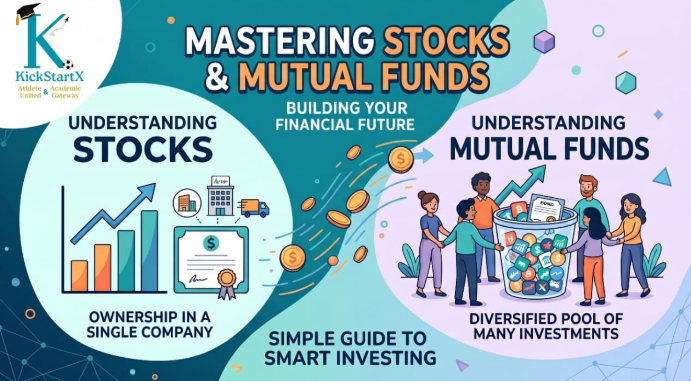
Understanding the world of investing can often feel like trying to read a menu in a language you do not speak while everyone else at the table is already ordering dessert. You hear terms like bull markets and bear markets and expense ratios and dividends and suddenly you feel like you need a finance degree just to open a savings account. But here is the secret that the suits on Wall Street might not want you to know. Investing is actually quite simple once you strip away the jargon and the terrifyingly fast moving green and red numbers on the news. Today we are going to dive deep into the two heavyweights of the investing world stocks and mutual funds. We will break down what they are and how they work and most importantly which one might be the right fit for your hard earned cash. So grab a cup of coffee and settle in because we are about to turn you into a confident investor without the headache.
Stocks vs. Mutual Funds
Understanding the world of investing can often feel like trying to read a menu in a language you do not speak while everyone else at the table is already ordering dessert. You hear terms like bull markets and bear markets and expense ratios and dividends and suddenly you feel like you need a finance degree just to open a savings account. But here is the secret that the suits on Wall Street might not want you to know. Investing is actually quite simple once you strip away the jargon and the terrifyingly fast moving green and red numbers on the news.
Today we are going to dive deep into the two heavyweights of the investing world stocks and mutual funds. We will break down what they are and how they work and most importantly which one might be the right fit for your hard earned cash. So grab a cup of coffee and settle in because we are about to turn you into a confident investor without the headache.
What Exactly Is a Stock
Imagine for a second that your best friend decides to open a gourmet taco stand. They have the recipes and the location and the secret sauce that makes people weep with joy but they do not have the money to buy the high end grill and the neon sign. So they come to you and say if you give me five hundred dollars today I will give you five percent of my taco business.
That right there is a stock. When you buy a stock you are buying a tiny piece of ownership in a company. You are literally a part owner. If the taco stand becomes a global franchise and starts selling millions of tacos you share in that success. The value of your five percent stake goes up and you might even get a share of the profits sent to you as a check. This is what we call a dividend.
However there is a flip side. If people decide they no longer like tacos or if your friend accidentally burns the stand down your investment might lose value or disappear entirely. That is the essence of stock market risk. You are hitching your wagon to a single horse.
The Thrill and Spills of Individual Stocks
Buying individual stocks is often what people think of when they imagine investing. It is the high stakes world of picking the next big tech giant or the next revolutionary energy company. It offers the potential for massive gains. If you had bought a few shares of a major computer company back in the nineties you would likely be reading this from a yacht right now.
But picking individual stocks requires a lot of homework. You have to look at their balance sheets and understand their competition and keep an eye on the CEO’s latest tweets. It is a bit like being a scout for a sports team. You are looking for the MVP before they become a superstar.
What Exactly Is a Mutual Fund
Now let us pivot to mutual funds. If a stock is a single taco from a single stand a mutual fund is an all you can eat buffet at a food festival.
A mutual fund is essentially a giant bucket of money collected from thousands of different investors. A professional fund manager takes that bucket and uses the money to buy a huge variety of different stocks or bonds or other assets. When you buy a share of a mutual fund you are not just owning one company. You are owning a tiny slice of every single company that the fund owns.
This is the concept of diversification. Instead of betting all your money on one taco stand you are betting on the entire food industry. If one stand closes down it does not matter much because you still have pieces of the pizza place and the burger joint and the salad bar.
Why Mutual Funds Are the Best Friend of the Busy Person
Most of us do not have eight hours a day to analyze the price to earnings ratios of a hundred different companies. This is where mutual funds shine. They offer a hands off approach to building wealth.
Expert Management You have a professional whose entire job is to pick the best investments for the fund.
Instant Diversification With one single purchase you can own hundreds of different stocks which lowers your risk.
Affordability It is much cheaper to buy one share of a mutual fund than it is to try and buy one share of every single company in the S and P 500.
Liquidity You can generally sell your shares in a mutual fund any day the market is open and get your cash back relatively quickly.
Comparing the Two The Great Debate
Deciding between stocks and mutual funds depends entirely on your personality and your goals and how much time you want to spend staring at charts.
If you enjoy the research and you want the chance to beat the market then individual stocks might be your playground. It is more work and higher risk but the rewards can be incredible. You have total control over what you own.
On the other hand if you want to set it and forget it while you focus on your career or your family or your hobbies then mutual funds are likely your best bet. They are designed for long term steady growth with less volatility than individual stocks.
The Hidden Costs What to Watch Out For
Nothing in life is free and that includes the stock market. When you buy individual stocks you usually pay a small commission to your broker although many apps now offer zero commission trading.
Mutual funds have a different cost structure. Since you are paying a professional to manage the fund they take a small percentage of your investment every year to cover their costs. This is called the expense ratio. It might sound small like one percent but over thirty years that one percent can eat a massive chunk of your total gains. This is why many modern investors prefer index funds which are a type of mutual fund that just tracks a specific list of companies and has very low fees.
Key Factors to Consider Before Investing
Before you move your money from your savings account into the market you should ask yourself a few questions.
What is my time horizon? If you need the money in two years for a house down payment the stock market might be too risky. If you are twenty five and saving for retirement in forty years you can afford to ride out the ups and downs.
What is my risk tolerance? Will you lose sleep if your account value drops by ten percent in a week? If so you might want a more conservative mutual fund rather than a portfolio of volatile tech stocks.
How much time do I have? Do you want a new hobby or do you want a passive income stream?
What are my goals? Are you looking for steady dividends or are you looking for explosive growth?
The Magic of Compounding
Whether you choose stocks or mutual funds the most important factor is time. There is a concept called compound interest that Albert Einstein allegedly called the eighth wonder of the world.
Compounding happens when your investment earns money and then that money earns money of its own. It starts slow like a snowball at the top of a hill. But as it rolls down it picks up more snow and gets bigger and faster until it is an unstoppable force. The earlier you start investing the more time your money has to compound. Even small amounts saved in your twenties can grow into massive sums by the time you retire.
Common Mistakes New Investors Make
It is easy to get caught up in the excitement of a rising market but many beginners fall into the same traps.
Panic Selling The market will go down. It is a fact of life. Many people see their balance drop and sell everything in a panic. This turns a temporary loss on paper into a permanent loss of cash.
Chasing Performance Just because a stock went up fifty percent last year does not mean it will do the same this year. In fact it might be due for a crash.
Ignoring Fees High expense ratios in mutual funds can drain your wealth over time. Always check the fine print.
Not Being Diversified Putting all your money into one hot stock is gambling not investing.
Waiting for the Perfect Moment People spend years waiting for a market crash so they can buy in at the bottom. Usually they just end up missing out on years of growth. The best time to start was yesterday. The second best time is today.
Building Your Portfolio
You do not actually have to choose just one. Many successful investors use a hybrid approach. They might put eighty percent of their money into broad low cost mutual funds or index funds to provide a solid foundation. Then they use the remaining twenty percent to play with individual stocks that they believe in. This gives you the safety of a diversified base with the excitement of picking potential winners.
The Role of Research and Education
The world of finance is constantly evolving. While the basics of stocks and mutual funds stay the same the companies involved and the economic landscape are always changing. Staying informed does not mean you have to watch financial news twenty four hours a day. It just means reading a few books or following a few reputable finance blogs to keep your knowledge fresh.
Conclusion
At the end of the day the choice between stocks and mutual funds comes down to how much control you want and how much risk you are willing to take. Stocks offer the thrill of the chase and the potential for huge wins but they require a lot of work and nerves of steel. Mutual funds offer a smoother ride and professional management making them ideal for the vast majority of people looking to build long term wealth.
The most important takeaway is simply to start. The market has historically trended upward over long periods of time. By understanding these tools and using them wisely you are taking control of your financial future. You are no longer just a consumer in the economy you are an owner. Whether you choose the individual taco stand or the whole food festival the goal is the same to make your money work as hard for you as you worked for it.
Investing is not a sprint it is a marathon. There will be rainy days and there will be sunny days. But if you stay the course and keep your eyes on the horizon you will find that the world of stocks and mutual funds is not nearly as scary as it looks from the outside. Welcome to the world of investing. Your future self will thank you.
Need help making the right career decision?
Explore KickStartX career counselling and education guidance services for personalised support, scientific assessments, and structured career planning.
Explore related KickStartX services
Continue from this topic to the most relevant counseling, admission, abroad studies, skills, and career pathway pages.