The Ultimate Guide To Understanding Your Employment Contract Before You Sign
Let us set the scene. You just crushed your final interview. The hiring manager called you with the good news. You are officially offered the job. Cue the confetti and the celebratory dance! But wait, before you can update your professional profile and pop the champagne, an email arrives. Attached is a massive PDF document filled with tiny text and complex legal jargon. Yes, it is your employment contract. Suddenly, the excitement fades, replaced by a wave of confusion and anxiety.
The Ultimate Guide To Understanding Your Employment Contract Before You Sign
Let us set the scene. You just crushed your final interview. The hiring manager called you with the good news. You are officially offered the job. Cue the confetti and the celebratory dance! But wait, before you can update your professional profile and pop the champagne, an email arrives. Attached is a massive PDF document filled with tiny text and complex legal jargon. Yes, it is your employment contract. Suddenly, the excitement fades, replaced by a wave of confusion and anxiety.
Do not panic! Understanding your employment contract does not require a law degree. It just takes a little patience and a guide to translate the corporate speak into plain English. Whether you are landing your first gig at a massive technology company in Bangalore, taking up a senior managerial role right here in Indore Madhya Pradesh, or securing a remote position based out of London or New York, the core elements of a job agreement remain surprisingly similar.
In this comprehensive blog post, we are going to break down everything you need to know about your job offer letter and employment agreement. We will answer the most common questions people ask voice search engines, explore local geographic nuances, and equip you with the knowledge to sign on the dotted line with absolute confidence. Grab a cup of coffee, and let us dive right into the fine print!
What Is An Employment Contract And Why Is It Important?
Let us start with the absolute basics. If you ask a voice assistant "What is an employment contract" the answer is very straightforward. An employment contract is a legally binding agreement between you and your employer. It outlines your rights, your daily responsibilities, the specific duties you will perform, and exactly what the company owes you in return for your hard work.
Think of it as the ultimate rulebook for your new professional relationship. It protects both parties involved. If your employer suddenly decides they want you to work Saturdays for free, your signed contract is your shield. Conversely, if you decide to leave without notice and take all their secret client lists with you, the contract is their shield.
Reading this document thoroughly is the single most important thing you can do before starting a new job. Ignoring the details can lead to unexpected surprises down the road, like discovering your paid time off does not roll over to the next year or finding out you cannot work for a competitor if you decide to quit your current role.
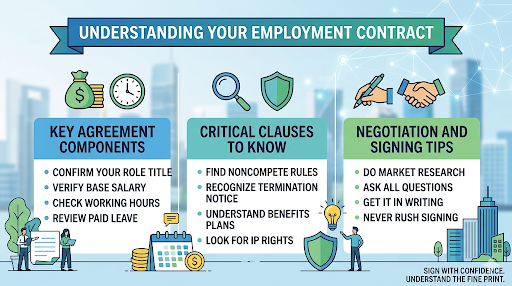
The Core Components Salary Job Title and Working Hours
When most people open their contract, their eyes immediately dart to the numbers. And honestly, that is completely fair! Here is exactly how to review the most critical sections of your new job agreement.
Your Official Job Title and Description
Does the title written in the contract match the role you interviewed for? It sounds completely obvious, but discrepancies happen more often than you might think. The document should clearly list your primary duties. If the description includes vague phrases like "and other duties as assigned" that is fairly standard practice. However, if the primary responsibilities look entirely different from what you discussed during your interviews, you need to pause and ask questions. You do not want to be hired as a marketing director only to find out you are mostly doing cold calls and basic administrative tasks.
Compensation Base Salary and Bonuses
Your compensation structure must be crystal clear. The contract should state your exact base salary. It should also specify the payment schedule. Will you be paid weekly, biweekly, or monthly?
If your role includes commission, performance bonuses, or profit sharing, the math and conditions for these payouts must be explicitly written out. Do not rely on verbal promises from the hiring manager. If they verbally stated you would get a massive year end bonus, make sure the exact percentage and the performance metrics required to earn it are written directly in the document.
Working Hours and Overtime Pay
How many hours are you expected to work each week? What are your core operating hours? This section is absolutely vital for maintaining a healthy work life balance. Additionally, the contract must clarify whether you are eligible for overtime pay. In many jurisdictions, salaried professionals might not receive extra pay for extra hours, but hourly workers absolutely must. Make sure you understand exactly what legal category you fall into before you start putting in late nights at the office.
The Probationary Period What You Need To Know
Often, contracts include a probationary period, usually lasting between thirty to ninety days. During this initial time frame, the employer is evaluating whether you are a good fit for the company culture and the demands of the role. Conversely, you are evaluating if the company is a good fit for you. Pay attention to the terms here. Usually, during a probationary period, the notice period required to terminate the employment is much shorter for both parties.
Decoding The Benefits Package Leaves Health Insurance and Perks
Your base salary is just one piece of the overall puzzle. The total benefits package can significantly boost your overall compensation. Here is what to look for when reviewing the company perks.
Paid Time Off and Sick Leaves
Everyone needs a break to recharge. Your agreement should detail exactly how many days of paid vacation you receive each calendar year. But do not stop there. Look closely for the rules surrounding these days. Can you carry unused vacation days into the next calendar year? Do you get paid out for unused days if you decide to resign? Furthermore, check the exact policy on sick leave and personal days. Knowing you have the right to rest when you are ill without losing a portion of your paycheck is crucial for your peace of mind.
Health Insurance and Retirement Plans
Medical emergencies are incredibly expensive everywhere in the world. A robust health insurance plan is a massive benefit that saves you money. The contract should outline exactly when your health coverage begins. Sometimes there is a mandatory waiting period of thirty to ninety days before your insurance activates.
Similarly, look for retirement contributions. Does the company offer a provident fund or a matching retirement plan? Free money put toward your future is always a fantastic addition to any job offer.
Professional Development and Wellness
Modern companies know that investing in their people is simply good business. Look for clauses related to educational stipends or professional development budgets. Will the organization pay for you to attend industry conferences or take online skills courses? Furthermore, many forward thinking organizations now include mental health days or paid subscriptions to wellness applications as part of their standard package. Ensure these modern perks are clearly defined so you can actually utilize them.
The Sneaky Clauses You Must Watch Out For
Now we get to the tricky part. The restrictive covenants. These are the strict rules that dictate what you cannot do, both during your employment and after you eventually leave the organization. Pay very close attention to these specific sections.
The Noncompete Clause
A noncompete agreement restricts you from working for a direct competitor for a specific period after you leave the company. For example, if you leave a software company in Bangalore, a noncompete might state you cannot work for another software company in India for six months. You must ensure the geographic scope and the time limit are reasonable. If a noncompete prevents you from earning a living in your chosen field for several years, that is a huge red flag that requires negotiation.
The Nondisclosure Agreement
Also known as a confidentiality clause, this prevents you from sharing company secrets, internal client lists, or proprietary information with outsiders. This is standard practice in almost every single industry today. Just be entirely sure you understand exactly what the company considers highly confidential.
Intellectual Property Rights
If you invent something brilliant, write an innovative piece of code, or design a beautiful new logo while on the clock, who actually owns it? The company does. This clause states that anything you create during your employment belongs entirely to the employer. However, if you have independent side projects, you need to be very careful. Ensure the contract does not accidentally claim ownership of the application you are building in your free time on your personal computer.
The Termination Clause
Nobody likes thinking about the end of a job before it even officially begins, but the termination clause is incredibly critical. How much notice must you give if you want to quit? How much notice must the company give you if they decide to let you go? What specific actions constitute termination for cause? Understanding the exit strategy is just as important as understanding the initial onboarding process.
Location Matters Local Laws and Geographic Nuances
Employment contracts do not exist in a vacuum. They are heavily influenced by local and regional labor laws. This is where geographic optimization comes into play. The rules change dramatically depending on exactly where you sit while typing on your laptop.
If you are reviewing an employment contract in Indore Madhya Pradesh or Mumbai Maharashtra, the document will likely reference specific Indian labor laws regarding provident funds, mandatory gratuity payouts, and state specific public holiday mandates.
If your job is based in London, your contract will strictly adhere to regional regulations regarding maximum weekly working hours and mandatory statutory leave minimums designed to protect workers.
If you are navigating the highly competitive job market in New York or California, you will quickly encounter the concept of at will employment. This generally means the employer can terminate your employment at any given time, for any legal reason, entirely without notice.
Always remember that local law supersedes a private company contract. An employer cannot force you to sign away your basic legal human rights simply based on a piece of paper. If you are ever unsure about the specific labor laws in your exact city or state, doing a quick local web search or consulting a local employment expert is incredibly beneficial.
Top Tips For Negotiating Your Contract
Many people falsely believe that an employment contract is a take it or leave it document. That is completely untrue. Professional negotiation is a normal and highly expected part of the modern hiring process. Here are some actionable tips to help you negotiate much better terms.
Read Every Single Word Carefully: Do not just skim the document. Set aside a quiet hour to read the entire file from start to finish. Highlight absolutely anything you do not completely understand.
Do Your Market Research: Know your true market value. Look up average salaries and standard benefits for your specific role in your exact city.
Prioritize Your Requests: You might not get every single thing you ask for. Decide what is most important to you. Is it a higher base salary, more vacation days, or the flexibility to work from home twice a week?
Ask For Clarification In Writing: If a particular clause confuses you, email the human resources department and politely ask them to explain it. Keep their written explanation safely stored for your personal records.
Never Rely On Verbal Promises: If the hiring manager says you will definitely get a promotion in six months, tell them you would love to see that performance milestone reflected directly in the contract.
Be Professional And Polite: Negotiation is not a battle. It is a professional collaboration. Frame your requests positively, focusing on how a fair agreement will help you perform your absolute best for the company.
Seek Professional Help If Needed: If you are signing a contract for a senior executive level position or if the legal document is overly complex, hiring an employment lawyer to review it is always a very smart investment.
Frequently Asked Questions About Employment Contracts
To make this comprehensive guide even more helpful, let us directly answer some of the top queries people frequently ask voice search assistants regarding job agreements.
What happens if I refuse to sign an employment contract?
If you outright refuse to sign, the employer will very likely withdraw the job offer completely. The signed contract is a mandatory condition of employment. However, refusing to sign the initial draft while you actively negotiate better terms is completely acceptable and normal.
Can an employer legally change my contract after I sign it?
Generally speaking, an employer cannot make significant changes to your contract, like drastically reducing your salary or changing your fundamental daily duties, without your explicit consent. If they attempt to do so forcefully, it might be considered a formal breach of contract.
Is a job offer letter the exact same thing as an employment contract?
Not exactly. An offer letter is usually a brief, exciting summary of the basic terms like starting salary and your official start date. The employment contract is the comprehensive legal document that contains all the detailed clauses, company policies, and restrictive covenants. Sometimes the offer letter becomes the official contract once signed, but very often they are two completely separate documents.
How long do I actually have to review my contract before signing?
Most reasonable employers will gladly give you at least a few days to a full week to thoroughly review the document. If a company pressures you to sign immediately on the spot without reading it, you should consider that a massive warning sign.
What should I do if I find a glaring mistake in my contract?
Simply point it out! Human errors happen all the time in business. Send a polite email to your recruiter or human resources contact noting the error, whether it is a misspelled name or an incorrect salary figure, and simply ask for a newly revised version before you sign your name.
Conclusion
Navigating the dense paragraphs of a legal document might never become your absolute favorite hobby, but truly understanding your employment contract is an absolute necessity for a long and successful career. It forms the solid foundation of your entire professional relationship with your new employer. By taking the necessary time to review your salary details, decode the complex benefits package, watch out for sneaky restrictive covenants, and understand exactly how your local geographic laws apply, you are actively protecting your professional future.
Remember, an employment agreement is not just about what the company expects from you it is also equally about what you rightfully deserve from the company. Do not ever be afraid to ask questions, firmly advocate for your personal needs, and confidently negotiate the terms that matter most to your life and career goals. Armed with the knowledge from this ultimate guide, you are now fully prepared to tackle that intimidating PDF, negotiate like a true professional, and start your brand new job with total confidence. Happy reading, happy negotiating, and massive congratulations on landing the new role!
Need help making the right career decision?
Explore KickStartX career counselling and education guidance services for personalised support, scientific assessments, and structured career planning.
Explore related KickStartX services
Continue from this topic to the most relevant counseling, admission, abroad studies, skills, and career pathway pages.