Microlearning for Students: Can 30 Minutes a Day Change Your Future?
Microlearning helps students build skills through short, focused daily learning sessions instead of long and tiring study blocks. This guide explains how 30 minutes a day can improve consistency, career readiness, exam preparation, communication skills and confidence for students who want to grow smarter in 2026.
Microlearning for Students: Can 30 Minutes a Day Change Your Future?
Most students want to improve their skills, but they often feel they do not have enough time. School, college, assignments, exams, entrance preparation, social life and career confusion can make learning feel heavy. This is where microlearning can help.
Microlearning means learning in small, focused sessions instead of long and tiring study blocks. A student can learn one concept, one skill or one topic in a short time and repeat it consistently. The idea is simple: small learning every day can create big improvement over time.
Many students search for questions like “microlearning for students”, “how to learn skills daily” or “can 30 minutes a day improve my future”. The answer is yes, if the student follows a clear routine and chooses the right skills.
What Is Microlearning?
Microlearning is a learning method where information is divided into small, easy-to-understand lessons. Instead of studying for 2 or 3 hours continuously, students learn through short sessions of 5 to 15 minutes.
A microlearning session can include:
A short video lesson
A quick quiz
Flashcards
One practice exercise
A short podcast
A small reading task
A mini assignment
One communication practice
One coding problem
One vocabulary activity
The goal is not to learn everything at once. The goal is to learn one thing properly and repeat it consistently.
Why Microlearning Works for Students
Students often lose focus during long lectures or heavy study sessions. Microlearning works because it matches the way students naturally consume information today.
Short lessons are easier to start, easier to finish and easier to repeat.
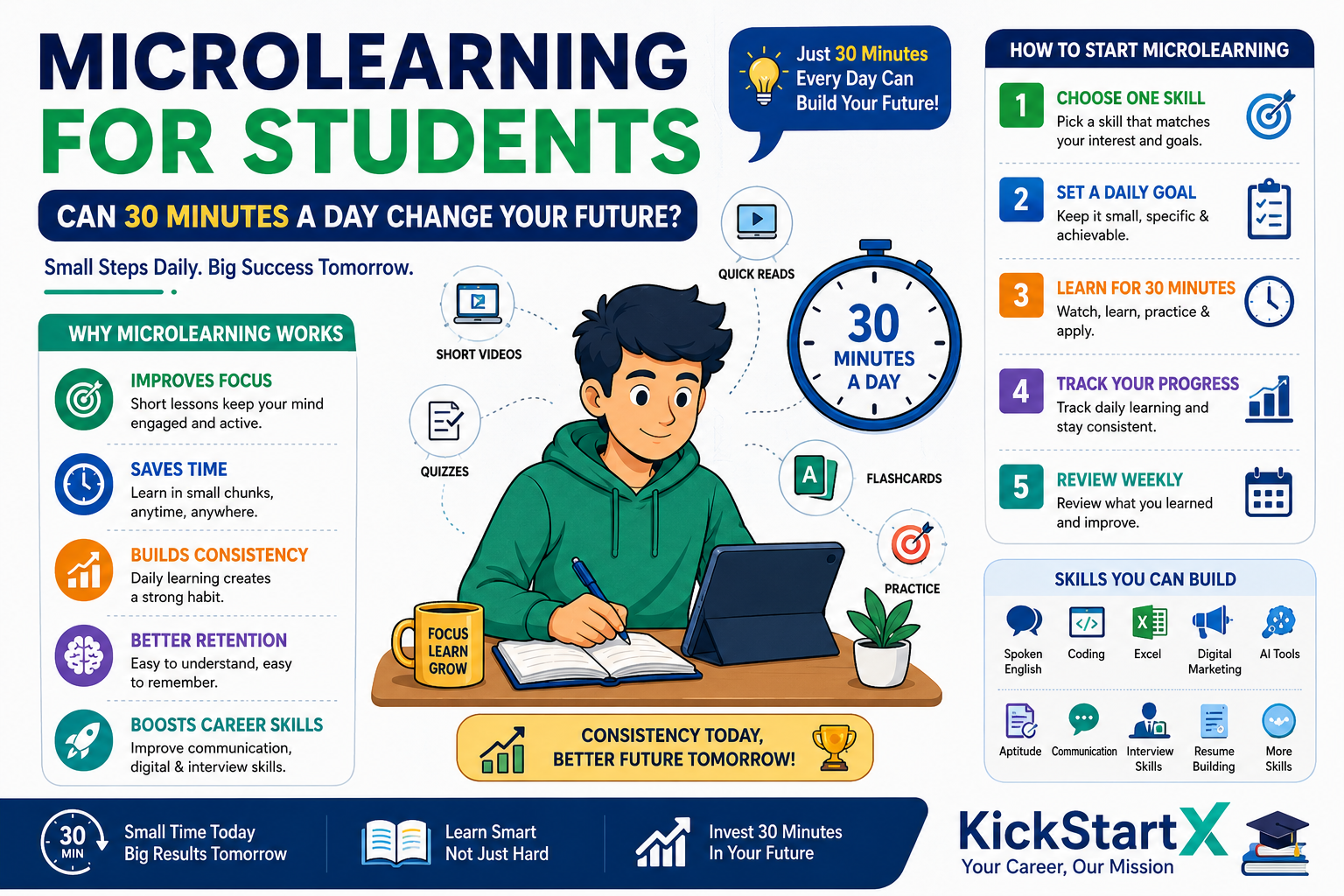
Microlearning helps students because:
It reduces study pressure
It improves focus
It saves time
It builds daily consistency
It makes revision easier
It supports skill development
It fits into busy schedules
It helps students avoid procrastination
When learning feels small and manageable, students are more likely to continue.
Can 30 Minutes a Day Really Make a Difference?
Yes, 30 minutes a day can make a big difference if used properly. The power of microlearning is consistency.
For example:
30 minutes daily = 3.5 hours per week
30 minutes daily = around 15 hours per month
30 minutes daily = more than 180 hours per year
A student who learns for 30 minutes every day can build real skills over time. The key is not just time. The key is focused learning.
Thirty minutes of distracted scrolling does not help. But 30 minutes of focused practice can improve English, coding, digital marketing, Excel, AI tools, exam revision or interview preparation.
Microlearning vs Traditional Learning
Traditional learning usually includes long classes, full chapters, long notes and heavy study sessions. This is useful for academic depth, but it can become tiring.
Microlearning is different. It focuses on small learning goals.
Traditional learning may say:
Study the full chapter today
Watch a 2-hour lecture
Complete a full course module
Microlearning says:
Learn one formula today
Watch one 8-minute concept video
Practice five questions
Learn ten new words
Write one short answer
Improve one resume section
Both methods have value. Microlearning does not replace school or college learning. It supports it.
Best Skills Students Can Learn Through Microlearning
Microlearning is useful for many student skills. It is especially helpful for skills that need regular practice.
Students can use microlearning for:
Spoken English
Communication skills
Vocabulary building
Interview preparation
Resume improvement
LinkedIn profile building
Python basics
Excel formulas
Power BI basics
Digital marketing
SEO basics
AI tools and prompt writing
Current affairs
Aptitude questions
Public speaking
Time management
Study abroad preparation
The best skill depends on the student’s career goal.
Microlearning for Career Readiness
Career readiness is not built in one day. Students need communication, confidence, presentation, resume, interview and digital skills.
Microlearning can help students become career-ready step by step.
For example:
Monday: Learn 5 interview questions
Tuesday: Improve one resume section
Wednesday: Practice self-introduction
Thursday: Learn one LinkedIn tip
Friday: Practice one communication activity
Saturday: Record a 1-minute speaking video
Sunday: Review progress
This kind of weekly routine can slowly build confidence.
Microlearning for Exam Preparation
Microlearning can also support exam preparation. Students preparing for school exams, CUET, NEET, JEE, IELTS, PTE or other exams can use microlearning for revision.
Students can use it for:
Quick formula revision
Flashcards
Short MCQ practice
One concept at a time
Vocabulary revision
Grammar practice
Previous year question practice
Mistake analysis
Daily test practice
Microlearning works best when combined with full study sessions. It is not a replacement for deep preparation, but it is very useful for revision and consistency.
Microlearning for AI and Digital Skills
In 2026, students need digital skills. AI tools, data skills, Excel, coding and digital marketing are becoming important across many careers.
Students can use microlearning to learn:
How to write better prompts
How to use ChatGPT for study planning
How to use Gemini for research
How to create presentations faster
How to use Excel formulas
How to understand basic data
How to write simple Python code
How to understand SEO basics
How to create social media content
Small daily learning can help students stay updated without feeling overloaded.
How to Start Microlearning
Students do not need a complicated plan. They can start with a simple 30-minute daily routine.
Step 1: Choose one skill
Do not start five skills together. Choose one skill first.
Examples:
Spoken English
Excel
AI tools
Python
Interview preparation
Digital marketing
Aptitude
Step 2: Set a small daily goal
The goal should be clear and realistic.
Examples:
Learn 10 English words
Watch one short video
Practice 5 aptitude questions
Write one paragraph
Learn one Excel formula
Create one AI prompt
Practice one interview answer
Step 3: Track your progress
Students should track what they learn daily. This keeps motivation strong.
They can use:
Notebook
Google Sheets
Habit tracker
Calendar
Mobile app
Daily checklist
Step 4: Review every week
At the end of the week, students should check:
What did I learn?
What did I miss?
What was difficult?
What should I continue?
What skill should I practice more?
Weekly review makes microlearning more effective.
30-Minute Microlearning Routine for Students
Here is a simple daily structure:
First 5 minutes: Revise yesterday’s learning
Next 15 minutes: Learn one new concept
Next 5 minutes: Practice it
Last 5 minutes: Write a quick summary
This routine is simple but powerful. It helps students learn, practice and remember.
For example, if a student is learning spoken English:
5 minutes: Revise yesterday’s words
15 minutes: Watch a short speaking lesson
5 minutes: Speak on one topic
5 minutes: Write what improved
If a student is learning Excel:
5 minutes: Revise old formula
15 minutes: Learn one new formula
5 minutes: Practice on sample data
5 minutes: Note where it can be used
Common Mistakes Students Make
Microlearning works only when students follow it correctly.
Common mistakes include:
Learning randomly without a goal
Watching videos without practice
Switching topics every day
Not tracking progress
Expecting instant results
Learning too many skills together
Not reviewing weekly
Using microlearning as a replacement for full study
Getting distracted by social media
Not connecting learning with career goals
Microlearning should be small, but it should not be careless.
Who Should Use Microlearning?
Microlearning is useful for many students, especially those who have limited time or low consistency.
It is helpful for:
School students
College students
Competitive exam aspirants
Students preparing for interviews
Students improving English
Students exploring new careers
Study abroad aspirants
Working professionals
Athletes balancing sports and academics
Students who struggle with long study sessions can benefit from short, focused learning.
How Parents Can Support Microlearning
Parents can support students by creating a positive learning environment. They should not pressure students to learn everything at once.
Parents can help by:
Encouraging daily routine
Appreciating small progress
Helping students choose useful skills
Avoiding comparison with others
Allowing flexible learning time
Discussing career goals
Supporting counselling if needed
A supportive environment makes consistency easier.
How KickStartX Helps Students Build Learning Roadmaps
KickStartX helps students understand what skills they should learn based on their academic background, career goals and future plans.
KickStartX can guide students with:
Career counselling
Skill development roadmap
Course selection
Study abroad planning
Resume and interview preparation
Spoken English and personality development direction
AI tools and digital skills awareness
Academic and career planning
Parent counselling
Long-term roadmap building
Microlearning becomes more powerful when students know what to learn and why they are learning it.
Final Advice
Microlearning is not about doing less. It is about learning smarter. A student who gives 30 focused minutes every day can build strong skills over time.
Small daily actions can improve confidence, communication, exam preparation and career readiness. The key is consistency.
If you are a student who feels confused or overloaded, start small. Choose one skill, give 30 minutes daily and track your progress every week.
KickStartX can help students choose the right skills, build a practical learning roadmap and prepare for a better academic and career future.
Need help making the right career decision?
Explore KickStartX career counselling and education guidance services for personalised support, scientific assessments, and structured career planning.
Explore related KickStartX services
Continue from this topic to the most relevant counseling, admission, abroad studies, skills, and career pathway pages.