Networking 101: How to talk to industry professionals
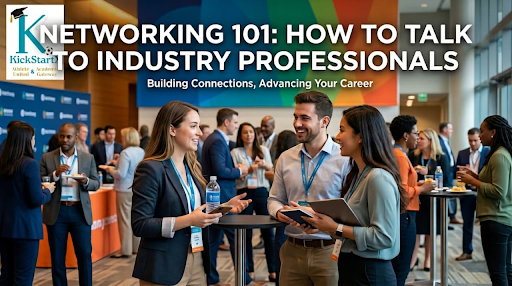
Welcome to the big leagues. Stepping into a room full of established professionals can feel like walking onto a field where everyone else already knows the playbook. Your palms sweat. Your heart races. You might even wonder if you belong there at all. Let us clear that up right now. You absolutely belong there. Networking is often misunderstood by students and young professionals. People usually think it is a transactional game of handing out business cards and delivering memorized speeches to strangers. But it is entirely different from that corporate stereotype. It is simply about building a community. It is about sharing stories. Think of it like a giant locker room. In any locker room, you have veterans and you have rookies. The veterans have the experience, the battle scars, and the wisdom that only comes from playing the game for years. The rookies have the energy, the fresh perspective, and the immense hunger to learn and prove themselves. Both sides genuinely need each other for the team to succeed. Networking is just the act of stepping up to a veteran and asking them how they played the game so well. We are going to break down exactly how you can talk to industry professionals without the awkwardness, building connections that actually matter for your future.
Networking 101: How to talk to industry professionals
Welcome to the big leagues. Stepping into a room full of established professionals can feel like walking onto a field where everyone else already knows the playbook. Your palms sweat. Your heart races. You might even wonder if you belong there at all. Let us clear that up right now. You absolutely belong there.
Networking is often misunderstood by students and young professionals. People usually think it is a transactional game of handing out business cards and delivering memorized speeches to strangers. But it is entirely different from that corporate stereotype. It is simply about building a community. It is about sharing stories.
Think of it like a giant locker room. In any locker room, you have veterans and you have rookies. The veterans have the experience, the battle scars, and the wisdom that only comes from playing the game for years. The rookies have the energy, the fresh perspective, and the immense hunger to learn and prove themselves. Both sides genuinely need each other for the team to succeed. Networking is just the act of stepping up to a veteran and asking them how they played the game so well. We are going to break down exactly how you can talk to industry professionals without the awkwardness, building connections that actually matter for your future.
The Three Pillars of Career Clarity
Before you even speak to a professional, you need to understand why you are doing it. Let us look at your career trajectory through three specific foundations. We call these the three pillars of career clarity. They are Skill, Interest, and Exposure.
Your Skill is what you bring to the table. It is your education, your late nights studying, your natural talents, and your ability to execute tasks. Your Interest is your true passion. It is the fire inside that gets you out of bed every morning. It is the reason you chose to explore a specific field, whether that is international commerce, rural management, or digital marketing.
But here is the absolute truth about the professional world. You can have world class skills and boundless interest, but if you do not have Exposure, you are playing a championship game in an empty stadium. Nobody is watching. Nobody knows what you are capable of achieving.
Networking is your ultimate tool for Exposure. It is the crucial third pillar. It puts your hard earned skills and your deep interests directly on the radar of the people who make decisions. It opens doors that a standard piece of paper simply cannot unlock. When you talk to industry professionals, you are not begging for a job. You are creating the Exposure necessary to let your Skills and Interests shine brightly.
The Locker Room Mentality
The biggest hurdle most people face when talking to professionals is their own mindset. You might look at a successful manager or a company founder and think they are unreachable. You put them on a massive pedestal.
You need to adopt the locker room mentality. Everyone in that room, no matter how successful they are today, was once a rookie. They all remember what it feels like to be completely lost, to be looking for a mentor, and to be hoping someone would take a chance on them. Because they remember that feeling, most professionals actually want to help you. They want to pass the baton to the next generation. They want to share their victories and warn you about their failures.
When you approach networking with this team building mindset, the fear starts to melt away. You are no longer a small fish in a big pond trying to survive. You are a rookie asking a veteran for advice on your swing, your strategy, or your game plan. It becomes a collaborative conversation rather than an intimidating interview.
Preparing for the Game
You would never walk into a major match without studying the opponent and knowing your own plays. The same applies to talking to professionals. Preparation is your secret weapon to eliminate nervousness.
Know Your Own Story: Before you ask someone about their journey, you need to clearly articulate your own. You should know your trajectory. What are you studying? What are your current projects? What is your ultimate goal? If you are a student mapping out a transition into higher education, be ready to share that vision clearly.
Do Your Research: If you know who will be at an event, look them up. Read their professional profiles. Understand what their company does. If they recently published an article or spoke at a conference, make a note of it. AI tools are fantastic for quickly researching industry trends so you can sound informed and completely up to date.
Define Your Goal: What do you want from this specific interaction? Are you looking for advice on picking a university degree? Are you trying to understand the daily routine of a digital marketer? Having a clear goal prevents you from rambling aimlessly.
Dress for the Part: Confidence starts from the outside in. Wear clothing that makes you feel powerful and comfortable. When you look like you belong, you will start to believe that you belong.
Making the Approach
This is the moment of truth. You are in the room, you see someone you want to talk to, and you have to make the move. Here is how you execute the approach flawlessly.
Read the Room: Look for open groups. If two people are standing close together and talking quietly, they are having a private conversation. Do not interrupt. Look for groups of three or more who are standing in a loose circle, or look for someone standing alone. People standing alone are usually thrilled when someone approaches them.
Your Body Language Matters: Stand up straight. Keep your shoulders back. Smile genuinely. Your body language communicates volumes before you even say a single word. A warm smile shows that you are friendly and approachable.
The Handshake: When you introduce yourself, offer a firm handshake. Make direct eye contact. Say your name clearly. A simple introduction is always the best path forward. "Hello, my name is Alex. It is a pleasure to meet you."
Conversation Starters That Actually Work
You do not need a magical phrase to start a conversation. You just need to be observant and genuinely curious. Here are some reliable ways to break the ice without sounding awkward or rehearsed.
The Situational Opener: Comment on the event itself. "The speaker made a fascinating point about artificial intelligence earlier. What did you think of that?"
The Advice Seeker: People absolutely love giving advice. It makes them feel valued. "I am currently studying commerce and looking into international programs. As someone established in the industry, what is one thing you wish you knew when you were in my shoes?"
The Research Approach: If you did your homework, use it. "I read your recent post about rural management strategies. I found your perspective on community engagement really insightful. Could you tell me more about how you implemented that?"
The Honest Approach: Sometimes, pure honesty is incredibly refreshing. "Hello, I am relatively new to these events and trying to build my exposure. I saw your name tag and your company always fascinated me. Do you mind if I ask you a few questions about your work?"
Mastering the Conversation
Once the conversation starts, your goal is to keep it flowing naturally. You want to build a bridge of connection.
Practice Active Listening: This is the most crucial skill in networking. Active listening means fully concentrating on what is being said rather than just passively hearing the message. Nod your head. Maintain eye contact. Give small verbal affirmations. Do not just wait for your turn to speak. Truly absorb their words.
Ask Open Ended Questions: Avoid questions that can be answered with a simple yes or no. Instead of asking "Do you like your job?" ask "What is the most rewarding part of your daily work?" This forces them to elaborate and share a story.
The Eighty Twenty Rule: A great rule of thumb for rookies talking to veterans is to listen eighty percent of the time and speak twenty percent of the time. Let them share their wisdom. Your role is to guide the conversation with intelligent questions.
Find Common Ground: Look for shared interests. Maybe you both follow the same sports team. Maybe you both started your careers in the same city. Finding a point of shared connection transforms the interaction from a professional requirement to a genuine human interaction.
Be Authentic: Never pretend to know something you do not. If they mention a software or a concept you are unfamiliar with, admit it. "I have not heard of that framework before. How does it work?" Authenticity builds trust much faster than pretending to be an expert.
Knowing When to Leave
A great conversation can easily be ruined if it drags on for too long. You need to know how to exit gracefully. You want to leave them wanting more, not checking their watches.
Keep an eye on their body language. If they start looking around the room or shifting their weight away from you, it is time to wrap things up. Respect their time. They are there to meet multiple people, and so are you.
A simple and polite exit is completely fine. Try saying something like, "It has been incredibly valuable talking to you and hearing your thoughts on team leadership. I know there are many people here today, so I will let you mingle. Could we connect online so I can keep up with your work?"
The Next Step
The initial conversation is just the starting point. The real value of networking comes from what you do after the event ends. If you meet someone amazing but never contact them again, you have wasted a golden opportunity for Exposure.
Connect Online Quickly: Reach out on professional platforms within twenty four hours. While the memory of your conversation is still fresh in their mind, send a connection request.
Personalize Your Message: Never send a blank connection request. Always include a brief note reminding them of who you are and what you discussed. For example, "Hello Sarah, it was fantastic meeting you at the summit yesterday. I really appreciated your advice on building a solid personal brand. I would love to stay connected."
Provide Value: Networking is a two way street. If you read an article that reminds you of your conversation, send it to them. If you see their company achieved a milestone, send a message congratulating them. You want to maintain the relationship naturally, just like checking in on a teammate.
Keep Them Updated: If a professional gave you specific advice and you followed it, let them know. Veterans love hearing that their guidance actually helped a rookie succeed. Send a quick note saying, "I took your advice about focusing on my presentation skills, and my recent school project was a massive success. Thank you again for the guidance."
Conclusion
Networking does not have to be a source of stress or anxiety. It is simply the practice of human connection. By remembering the three pillars of career clarity, you realize that talking to professionals is just the Exposure needed to highlight your Skill and Interest. When you walk into a room with a locker room mentality, viewing everyone as a potential teammate rather than a scary judge, you completely change the dynamic.
Remember to prepare thoroughly, approach people with genuine curiosity, listen actively, and always take the next step to maintain the relationship. You have the talent and the drive. Now it is time to step out onto the field, start having these important conversations, and build the professional community that will support your journey for years to come.
Would you like me to generate a checklist of specific open ended questions your students can print out and bring to their next event?
Need help making the right career decision?
Explore KickStartX career counselling and education guidance services for personalised support, scientific assessments, and structured career planning.
Explore related KickStartX services
Continue from this topic to the most relevant counseling, admission, abroad studies, skills, and career pathway pages.