The Ultimate Guide: How to Build a Professional Portfolio as a Student (Even If You Think You Have Zero Experience)
Hey there, fellow student. If you are reading this, chances are you are standing at that awkward precipice of your life. On one side is the comfort zone of academia, where your success is measured in letter grades. On the other side is the "real world," that intimidating place where employers demand five years of experience for an entry level job.
The Ultimate Guide: How to Build a Professional Portfolio as a Student (Even If You Think You Have Zero Experience)
Hey there, fellow student. If you are reading this, chances are you are standing at that awkward precipice of your life. On one side is the comfort zone of academia, where your success is measured in letter grades. On the other side is the "real world," that intimidating place where employers demand five years of experience for an entry level job.
It feels like a massive trap, does it not? How are you supposed to get experience if nobody will hire you without experience? It is enough to make anyone want to curl up in a ball and binge watch a whole series instead of studying for finals.
But do not panic just yet. I have a secret weapon for you. It is better than a shiny new resume. It is more impactful than a polished cover letter. It is the professional portfolio.
Forget the old school idea that portfolios are only for graphic designers, photographers, or architects. While they absolutely still need them, in today’s digital world, everyone needs one. If your intended career involves creating something, solving problems, managing projects, or coding software, you need a portfolio.
A portfolio is the ultimate "show, do not tell" asset. Instead of writing on your resume that you are "highly organized" or a "proficient coder," you can literally show them the complex project plan you executed or the elegant lines of code you wrote. It is proof. It is evidence. And for a student, it is the best way to level the playing field.
This guide is your roadmap to building a stunning professional portfolio from scratch, even if your professional work history is currently nonexistent. Let us dive in and build something awesome.
Phase One: Understanding the Portfolio Mindset
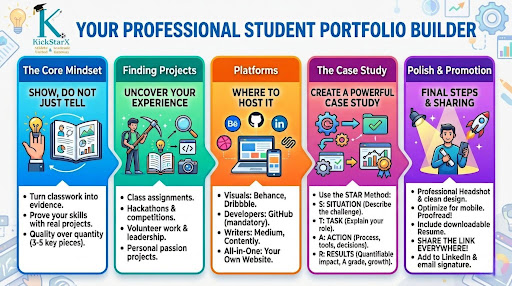
Before you open a website builder or write a single word, you need a mental shift. A portfolio is not just a digital scrapbook where you put everything you have ever done. It is a strategic marketing document where you are the product.
It Is Not About You; It Is About Them
When an employer looks at your portfolio, they are asking one question: "Can this person do the job I need them to do?"
Your portfolio should be designed to answer that question with a resounding "Yes!" every single time. This means you cannot just dump your old essays in a folder and call it a day. You need to curate your content to reflect the skills required in your desired industry.
Quality Over Quantity
A common mistake students make is including every single assignment they ever completed to make the portfolio look full. Stop that right now.
Three stellar projects that show deep understanding, critical thinking, and professional execution are worth far more than fifteen mediocre assignments. Your portfolio is a highlights reel, not raw unedited footage. Aim for between three and five solid projects for your first professional portfolio. If you have only two amazing ones, use those two.
Phase Two: Mining Your Life for Projects (The "Zero Experience" Myth)
This is where the real work begins, and the panic usually sets in. "But I have never had a real job! What do I put in my portfolio?"
This is the central myth about student portfolios. "Experience" does not only mean "time spent in a salaried job." Experience means any time you applied skills to get a result. If you are a student, you have experience. You just need to reframe it.
Here is where to look for projects to populate your portfolio:
Class Projects: This is your biggest goldmine. Think of that giant group project that took three weeks. Think of that 20 page research paper. Think of the business plan you had to write for your entrepreneurship final. These are not just assignments; they are portfolio pieces.
Case Competitions or Hackathons: These are portfolio gold. They show that you are competitive, can work under immense pressure, work in a team, and solve real world problems in a very short amount of time. Even if you did not win, the solution you developed is excellent material.
Volunteer Work and Extracurriculars: Did you manage the social media for your university’s hiking club? That is a marketing project. Did you organize a massive fundraising event for a charity? That is project management and event planning. Did you redesign your local animal shelter’s website? That is a web design and community service project.
Personal Passion Projects: Do not underestimate these. Employers love passion. Do you code games for fun on weekends? Have you written 50 movie reviews on your personal blog? Do you fix and flip vintage furniture? Do you manage a highly engaged fan community for your favorite band? All of this shows initiative, dedication, and specific technical skills.
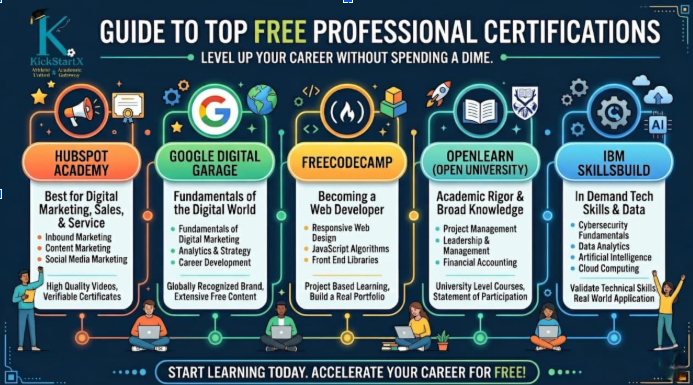
Certifications and Courses: Did you complete a free Google Analytics certification? Did you take a Python course on Coursera over the summer? While these are not "projects" in themselves, you can create a project to prove you learned the skill. Use Google Analytics to analyze a friend’s website, or write a Python script to automate a boring task.
The Proactive Freelance Project: This is the ultimate move. Reach out to a local small business or a nonprofit that is clearly struggling with a problem your skills could solve. Offer to solve it for free or for a very low fee, in exchange for being allowed to use the project in your portfolio and get a testimonial. You get experience, a portfolio piece, and a happy reference. Everyone wins.
Phase Three: Choosing Your Platform
You have gathered your projects. Now, where do you put them? The medium matters. Your platform must be accessible, professional, and easy for you to manage.
The Niche Specific Platforms (Go Where the Employers Are)
For Designers and Creatives: Behance and Dribbble are the absolute gold standard. These platforms are essentially search engines for talent. Employers go here specifically to find and hire creatives.
For Developers and Coders: GitHub is not optional; it is mandatory. Your GitHub profile is your real resume. Employers will look at your code commit history to see how consistent you are, and they will read your actual code to evaluate your technique.
For Writers and Journalists: Medium, Substack, or even Contently are excellent options. They present your writing in a clean, uncluttered, readable format.
For Marketers, Analysts, and Business Professionals: LinkedIn is the correct answer. LinkedIn has a "Featured" section on your profile where you can pin projects, presentations, articles, and websites. Do not just upload a resume and disappear. Turn your LinkedIn profile into your portfolio hub.
The "All in One" Website Builder (The Gold Standard for All)
While niche platforms are vital, the very best thing you can have is your own dedicated corner of the internet. A personal website portfolio gives you full control over the narrative, design, and user experience. It shows extreme professionalism and commitment.
Platforms like Wix, Squarespace, or even WordPress are extremely user friendly and offer professional looking templates. You do not need to be a coding genius to build a beautiful site. Just stick to a clean, simple, easy to navigate layout.
Phase Four: Structuring Your Masterpiece
You have your projects and you have your platform. Now, let us assemble the structure. Your portfolio website should have a clear, easy to navigate structure. Think of it like this:
The Home Page (The First Impression): Keep this short, visual, and impactful. State exactly who you are and what you do. Have a compelling "headline" like, "Jane Doe: Strategic Marketer with a Passion for Sustainable Branding." Your "calls to action" should be prominent, directing people directly to your "About" page or your "Work" section.
The About Me Page (The Human Connection): This is not a formal bio. This is your chance to tell your story and show your personality. Share your journey. Why did you choose this field? What are you passionate about? How did your unique student experience shape your view of the industry? Be authentic and a bit conversational. People hire people they like.
The Portfolio or Work Page (The Main Event): This is where you will showcase your curated projects. Do not just use thumbnails or links. Every single project needs its own dedicated section or a separate case study page.
The Resume or CV Page (The Formalities): Include a downloadable PDF of your modern, well formatted resume. This is for the applicant tracking systems (ATS) and the HR departments. Also, create a clean, one page HTML version that is easy to scan directly on the web page.
The Contact Page (The Call to Action): Make it stupidly easy to contact you. Include a simple contact form, your professional email address, your LinkedIn profile link, and any other relevant social media profiles.
Phase Five: The Art of the Case Study (The Most Important Section)
If you remember only one thing from this entire guide, let it be this: A portfolio is not just about the final result. It is about the process.
Employers do not just want to see the final logo. They want to know how you got there. This is why every single portfolio project needs to be presented as a "case study." This format turns an assignment into a narrative of professional problem solving.
Use the STAR method to structure your project case studies. This framework, commonly used for behavioral interview questions, works perfectly here:
S: Situation (The Challenge): What was the initial problem, opportunity, or assignment? Describe the context clearly. Was it a class project, a personal initiative, or a client job? What was the goal you needed to achieve?
T: Task (The Role): What was your specific role in the project? If it was a group project, precisely what parts did you lead or execute? What skills did you need to use?
A: Action (The Process): This is the core. What steps did you take? What research did you conduct? What tools, software, or methodologies did you use? Show your sketches, your messy wireframes, your initial code prototypes, or your raw data analysis. This shows your critical thinking and how you overcome obstacles. Be specific and detail the decisions you made along the way.
R: Results (The Impact): This is the most crucial part that students always forget. What was the outcome? What did you achieve? Did you finish on time? Did you get an "A"? Did you increase social media engagement? Did you save your volunteer organization money? Did your code actually run and solve the problem? Whenever possible, use numbers and data to quantify your results. Metrics are universal languages of success.
By turning your assignments into case studies, you are no longer just "a student who did a class project." You are now "a professional who can analyze a situation, take action, and deliver measurable results." The transformation is profound.
Phase Six: Crucial Polish, Design, and User Experience
A portfolio with poor design and broken links is arguably worse than having no portfolio at all. It signals to employers that you do not care about quality, attention to detail, or professionalism. Sweat the small stuff.
Here is your final checklist for professional polish:
Bullet Points for Readability: Break up large chunks of text. Human beings scan web pages. They do not read every word. Use bullet points for your skills, your resume history, and the key accomplishments in your project case studies.
Professional Photography and Visuals: Please, I am begging you, invest in a professional headshot. Have a friend take a high quality picture in professional attire, with good lighting and a clean background. For your portfolio pieces, use high resolution images and clean mockups to showcase your work. Your design projects should be presented on realistic phone or laptop mockups. Your coding projects should have clear code snippets and screenshots of the finished product.
Bulletproof Proofreading: Run every single word of your portfolio through spell check and Grammarly. Ask a trusted friend or a mentor to read it over with a critical eye. A typo in your summary or your case study instantly tanks your credibility.
Test Every. Single. Link. If you link to a live website you coded, test the link. If you link to your resume, test the download. If you link to your LinkedIn profile, make sure it is correct. Broken links are a cardinal sin of portfolio building.
Make It Mobile Friendly: Over half of all web traffic comes from mobile devices. Your portfolio might look perfect on your laptop, but if it is a total mess on a smartphone, you will lose opportunities. Use a modern, responsive template and test your site on your own phone and a friend’s tablet.
Add "Social Proof": As a student, credibility is your rarest resource. If you have any testimonials, recommendations, or endorsements from professors, previous managers, internship supervisors, or group project partners, use them. A single quote saying, "Jane is a proactive and reliable teammate who always goes the extra mile," is incredibly powerful.
Phase Seven: Promotion (Do Not Just Build It; Brag About It)
You have built a masterpiece. You polished it to perfection. Now, if you just leave it sitting there and do not tell anyone, was it really worth it? Your job is not done. You now need to actively promote your portfolio and integrate it into your job search strategy.
Optimize Your LinkedIn Profile: LinkedIn is the professional world’s nervous system. Put the link to your portfolio everywhere. Put it in your "Contact Info," in your professional "Headline," and in the description of every single "Education" and "Experience" entry. The first thing an interested recruiter will do after seeing your profile is search for your portfolio. Make it easy for them.
Add It to Your Email Signature: This is a subtle yet incredibly powerful move. Every single professional email you send to recruiters, professors, and professional contacts is now an opportunity. Add a line at the bottom of your email signature: "See my work: [Link to your Portfolio]."
Lead with Your Portfolio in Cover Letters and Job Applications: Instead of just sending a boilerplate application, mention your portfolio early on. "You will see from the project in my portfolio [Link to specific case study] that I have already solved a similar marketing problem with a 15% increase in engagement. My project on [Another link] further showcases my analytical and project management skills." This instantly makes you stand out from the generic applications.
Network with It: When you are at a virtual career fair or a real life networking event, have your portfolio ready on your phone. You can say, "Oh, you are curious about my work with data analytics? I have a case study on my phone from a class project where I used SQL to solve this type of problem. Let me show you." This conversation starter is infinitely more memorable than just handing over a business card.
Keep It Fresh: A portfolio is not a static object; it is a living, breathing document. As you complete new courses, learn new skills, do internships, or start personal projects, your best work should constantly be replace your older, slightly less impressive work. Update your "About" section as your goals and passions evolve.
Conclusion: Start Building Today
Building your first professional portfolio will feel daunting. It is a long, difficult process of self reflection, creation, curation, and polish. But it is also the most important thing you can do for your future.
It is how you stop asking for permission to be seen as a professional and instead take the initiative to prove you are one. It is how you turn your potential into tangible evidence.
Do not wait until you graduate. Do not wait until you get your "first real job." The best time to start was at the beginning of your university career. The second best time is right now.
Start by digging up one project you are proud of. Write a single sentence explaining what problem it solved. Then write another. Step by step, you will build not just a portfolio, but the very foundation of the professional you are destined to become. Go get started. The world is waiting to see your brilliance.
Need help making the right career decision?
Explore KickStartX career counselling and education guidance services for personalised support, scientific assessments, and structured career planning.
Explore related KickStartX services
Continue from this topic to the most relevant counseling, admission, abroad studies, skills, and career pathway pages.