The Ultimate Guide to Finding a Mentor and Asking the Right Questions
Navigating a modern career path without a guide is a lot like trying to assemble complex furniture without the instruction manual. You might eventually figure it out through sheer willpower, but you are going to build it upside down a few times first. A mentor provides that missing manual. Having a dedicated professional by your side is basically a career cheat code. In fact, data shows that professionals who stick with a guide for over three months reach their goals twice as fast as those who try to go it alone.1 But here is the catch finding the perfect guide and knowing exactly what to ask them can feel incredibly intimidating. It does not have to be! The modern landscape of professional guidance is connective, dynamic, and genuinely fun. We are no longer limited to stiff corporate hierarchies. Today, you can connect with brilliant minds across the globe, share a virtual coffee, and unlock insights that can completely transform your trajectory.2 If you are ready to accelerate your growth, build incredible connections, and step confidently into your future, this guide is for you. We are going to explore exactly how to find your professional guide, how to make the approach without feeling awkward, and the golden questions you need to ask to extract maximum value from your conversations.
The Ultimate Guide to Finding a Mentor and Asking the Right Questions
Navigating a modern career path without a guide is a lot like trying to assemble complex furniture without the instruction manual. You might eventually figure it out through sheer willpower, but you are going to build it upside down a few times first. A mentor provides that missing manual. Having a dedicated professional by your side is basically a career cheat code. In fact, data shows that professionals who stick with a guide for over three months reach their goals twice as fast as those who try to go it alone.1
But here is the catch finding the perfect guide and knowing exactly what to ask them can feel incredibly intimidating. It does not have to be! The modern landscape of professional guidance is connective, dynamic, and genuinely fun. We are no longer limited to stiff corporate hierarchies. Today, you can connect with brilliant minds across the globe, share a virtual coffee, and unlock insights that can completely transform your trajectory.2
If you are ready to accelerate your growth, build incredible connections, and step confidently into your future, this guide is for you. We are going to explore exactly how to find your professional guide, how to make the approach without feeling awkward, and the golden questions you need to ask to extract maximum value from your conversations.
Rethinking the Modern Professional Bond
Before you start your search, it is important to understand that the traditional model has evolved. You do not necessarily need a senior executive with thirty years of experience to give you a weekly lecture. The ecosystem is far more diverse and exciting today.
First, there is the incredible rise of reverse mentoring. This is a super fun dynamic where a younger or less experienced professional actually guides a senior leader.3 For example, a new graduate might help a company president understand Generation Z culture, emerging social media trends, or new digital tools.3 It is a beautiful two way street where both parties learn and grow together.
Second, the world has gone virtual. You are no longer restricted by your zip code.2 Thanks to technology, a designer in London can easily be mentored by a product manager in Silicon Valley.1 This global accessibility means you can find someone whose skills and values perfectly align with your own, regardless of where they live.
Finally, consider building a personal board of advisors. Why rely on just one person? Many successful professionals cultivate a diverse network of guides.2 You might have one person who gives you tactical coding advice, another who helps you navigate office politics, and a third who provides emotional support when you are feeling overwhelmed.3
Where to Find Your Career Guide
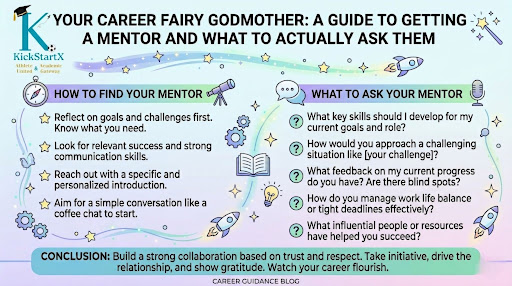
The best place to start looking is right in your own backyard. Often, the perfect guide is someone you already know.5 Take a look at your existing network. Former managers, college professors, and senior colleagues are fantastic candidates.5 They already know your work ethic and your personality, which makes the transition into a formal advisory role completely natural.6
If you belong to a professional organization or an alumni network, take advantage of them! Many industry specific conferences and associations host official matchmaking events designed specifically to pair enthusiastic learners with seasoned experts.5 There are also incredible nonprofits, such as San Diego Squared, which create structured programs to connect underrepresented students with professionals in science and technology fields.5
However, if your immediate circle feels a bit dry, do not worry. The internet is packed with dedicated platforms built entirely to help you find your professional match. Here is a quick breakdown of some of the best digital networks available today.
The Art of the Ask (Without Making It Weird)
Okay, you have found someone whose career you absolutely admire. Now comes the scary part sending the message. The biggest mistake people make is coming on too strong. As industry veterans say, nobody wants to get married on the first date.6 If your very first message asks them for a massive, months long commitment, they will probably run the other way.6
The secret to a successful approach is keeping it low friction and highly personalized. Start by reaching out for a single piece of advice. Keep your message incredibly brief and acknowledge that their time is valuable.9 Mention exactly why you admire them, whether it is a recent project they launched or an article they wrote.5 This proves you have done your homework and you are not just sending a generic template to fifty different people.
Here is a great way to frame it: Tell them you are incredibly inspired by their specific work and ask if they would be open to a brief fifteen minute virtual coffee chat.5 Everyone has fifteen minutes to spare for someone who is polite and eager to learn.
If that first chat goes well and you feel a genuine spark, you can transition the relationship. Follow up with a note thanking them, explaining exactly how you applied their advice, and asking if they would be open to a casual monthly check in.6 By letting the relationship grow organically, you remove the pressure and make it fun for both of you.
The Golden Questions What to Actually Ask Them
You secured the meeting! Now the spotlight is on you. You are the driver of this relationship, which means you need to show up prepared.11 Having a list of brilliant, engaging questions is the best way to show your guide that you respect their time. Avoid asking things you could easily Google. Instead, focus on their personal experiences, their failures, and their unique perspectives.
Here are some of the best questions you can ask to spark deeply connective and valuable conversations.
Icebreakers and Building a Genuine Connection
Before you dive into deep career strategy, build some human rapport. People love talking about their passions!
What initially inspired you to pursue this specific career path? 13
What was your very first job in this industry like? 13
What projects or daily tasks genuinely energize you right now? 14
What is the best professional book or podcast you have consumed recently? 13
Deconstructing Their Journey
Learning from their history provides you with a roadmap for your own future.
What were the biggest turning points in your career that led to your current role? 15
If you could go back in time, what do you wish you had done differently in your early career? 15
What are the most common hidden obstacles in our industry that I should be watching out for? 13
Of all your achievements, which one makes you the most proud and why? 13
Tactical Advice and Skill Building
This is where you extract the specific knowledge you need to level up.
Based on what you know about me, what do you think my biggest blind spots are? 13
Which technical skills are becoming the most valuable in our field right now? 16
How do you recommend I prepare for a major performance review or a salary negotiation? 13
Are there any specific courses or certifications you think are absolutely necessary for my growth? 16
Mastering Soft Skills and Resilience
Technical skills get you the job, but soft skills get you the promotion.
How do you manage your work life balance to prevent burnout? 13
What is the most spectacular professional failure you have experienced, and how did you recover from it? 15
How do you deliver difficult feedback to someone without ruining the relationship? 13
What is your secret to staying calm and productive when working with difficult personalities? 15
Famous Examples of Mentorship Magic
If you ever doubt the power of these relationships, just look at history. Some of the most brilliant minds in business attribute their massive success to the people who guided them behind the scenes.17
Take Mark Zuckerberg, for example. In the early days of building his social media empire, things got tough, and he faced intense pressure to sell the company.19 He turned to Steve Jobs for advice. Jobs did not give him a spreadsheet or a financial strategy. Instead, Jobs told him to travel to a specific temple in India to reconnect with his core vision.19 That spiritual trip helped Zuckerberg find his focus and build a global superpower.
Or consider the relationship between Bill Gates and Warren Buffett. When they first met, Gates assumed they would have nothing in common since Buffett was just an investor.18 But Buffett taught Gates the profound value of extreme patience and long term thinking, completely changing how Gates viewed the business world.18
There is also the legendary Bill Campbell, a man known as the trillion dollar coach. Campbell guided massive industry titans like Jeff Bezos and Sheryl Sandberg.18 He helped Bezos find the courage to take the massive risks that built cloud computing, and he helped Sandberg navigate complex leadership dynamics in a male dominated industry.18 Campbell proved that the best guides care just as much about your personal well being as they do about your corporate success.18
Even Henry Ford needed a push! Before Ford became a household name, he explained his idea for a motorized carriage to the famous inventor Thomas Edison.18 Edison enthusiastically validated the idea, giving Ford the massive confidence boost he needed to keep inventing and eventually change the world.18
How Not to Be a Terrible Mentee
Finding a great guide is amazing, but keeping them is entirely up to you. Many professionals accidentally ruin these relationships by making totally avoidable mistakes. If you want to be the kind of mentee that experts absolutely love working with, keep these rules in mind.
First, do not expect them to do the heavy lifting.12 Your guide is not your personal assistant or your college professor. They are not going to create a syllabus for you or remind you to schedule meetings.12 You must take the initiative. Send the calendar invites, create the meeting agendas, and show up completely prepared.11
Second, if you ask for advice, you actually have to take it! Nothing is more frustrating for an expert than giving a great recommendation and then finding out you completely ignored it.20 If they suggest you read a certain article or try a new communication tactic, do it before your next meeting and report back on your results.20
Finally, remember that gratitude is everything. Mentorship is a massive time commitment, and experts do it entirely out of the goodness of their hearts.11 Send them a handwritten thank you note.11 Offer to help them with a project they are working on.11 Share an interesting article you found that relates to their industry. When you turn the relationship into a supportive, two way street, you will build a friendship that lasts your entire career.
Conclusion
Finding the right professional guide is one of the most exciting and transformative things you can do for your career. It takes a little bit of bravery to send that first message, but the rewards are absolutely mind blowing. By utilizing the brilliant digital platforms available today, tapping into your existing network, and approaching experts with respect and curiosity, you open doors you never even knew existed.
Remember to keep things fun and conversational. Prepare those golden questions, listen deeply to their stories, and never be afraid to share your own goals and failures. When you show up with genuine enthusiasm, a willingness to learn, and a deep appreciation for their time, you will not just gain a mentor you will gain a powerful ally for life. Now get out there, send that message, and start building your future!
Need help making the right career decision?
Explore KickStartX career counselling and education guidance services for personalised support, scientific assessments, and structured career planning.
Explore related KickStartX services
Continue from this topic to the most relevant counseling, admission, abroad studies, skills, and career pathway pages.