The Ultimate Guide to Productivity Hacks for Students with a Busy Schedule
Welcome to the wild and wonderful world of student life! If you are reading this, you are probably juggling a million things right now. Between attending lectures, writing essays, preparing for exams, managing a part time job, and trying to maintain a tiny bit of a social life, you might feel like there are simply not enough hours in the day. You are definitely not alone in this struggle. Students all over the globe face this massive challenge every single day.
The Ultimate Guide to Productivity Hacks for Students with a Busy Schedule
Welcome to the wild and wonderful world of student life! If you are reading this, you are probably juggling a million things right now. Between attending lectures, writing essays, preparing for exams, managing a part time job, and trying to maintain a tiny bit of a social life, you might feel like there are simply not enough hours in the day. You are definitely not alone in this struggle. Students all over the globe face this massive challenge every single day.
Whether you are navigating the vibrant streets of Indore, commuting through the busy subways of New York, or attending classes in a quiet college town, the overwhelming pressure of a packed calendar is a universal experience. But do not panic! You do not need to sacrifice your sleep or your sanity to get good grades. You just need the right strategies. This comprehensive guide is packed with the absolute best productivity hacks for students with a busy schedule. Grab your favorite beverage, take a deep breath, and let us dive into the ultimate time management tips for college students that will completely transform your academic journey.
The Mindset Shift: Stop Glorifying the Hustle
Before we jump into the tactical productivity hacks, we need to talk about your mindset. Society often glorifies the exhausted student who pulls all nighters and survives solely on energy drinks. This is a toxic approach to education and a fast track to burnout. True productivity is not about working harder or longer. It is about working smarter.
Your goal should be to maximize the output of the time you spend studying so you can actually enjoy your life outside of the classroom. Being busy is a state of having a lot to do, but being productive means you are actually making progress on the things that matter most. Once you shift your perspective from trying to do everything to trying to do the right things efficiently, you will feel a massive weight lift off your shoulders.
Master Your Calendar Like a Professional
If you do not control your schedule, your schedule will control you. One of the most effective productivity hacks for students with a busy schedule is mastering the art of calendar management. Let us explore some powerful ways to organize your day to day life.
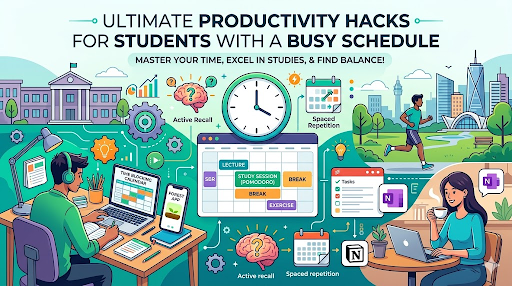
• Embrace Time Blocking: This is a game changer. Instead of working from a massive and terrifying to do list, assign specific blocks of time in your calendar for specific tasks. For example, block out nine in the morning until ten thirty for reviewing biology notes. When you assign a timeframe to a task, you are much more likely to complete it.
• The Two Minute Rule: If a task takes less than two minutes to complete, do it immediately. Replying to a quick email, printing out a syllabus, or organizing your desk are perfect examples. Getting these tiny tasks out of the way clears mental space for deep work.
• Prioritize with the Eisenhower Matrix: Not all tasks are created equal. Categorize your responsibilities into four boxes based on urgency and importance. Focus your best energy on tasks that are important but not necessarily urgent, like long term projects and consistent studying. This prevents the last minute panic that plagues so many students.
• Schedule Your Breaks: Yes, you need to schedule your downtime! If you do not plan for breaks, you will end up endlessly scrolling through social media when you are supposed to be studying. Plan exactly when you will step away from your books to recharge.
Study Hacks That Actually Work
Now let us get into the core of your academic life. Spending six hours reading a textbook is useless if you do not retain any of the information. Here are the best study methods for busy students that utilize cognitive science to help you learn faster and remember more.
• Active Recall: Reading and highlighting are passive study methods. They make you feel like you are learning, but the information rarely sticks. Active recall forces your brain to retrieve information from memory. Close your book and write down everything you know about a topic. Create flashcards and test yourself relentlessly. It is difficult, but it is the most effective way to learn.
• Spaced Repetition: Do not cram! Your brain learns best when it is exposed to information over increasing intervals of time. Review your notes one day after the lecture, then three days later, then a week later. This method interrupts the forgetting curve and locks information into your long term memory.
• The Pomodoro Technique: This is a classic for a reason. Set a timer for twenty five minutes and work with intense focus. When the timer goes off, take a five minute break. After four cycles, take a longer break of twenty to thirty minutes. This keeps your brain fresh and prevents the fatigue that comes from marathon study sessions.
• The Feynman Technique: The best way to test if you truly understand a concept is to try teaching it to someone else. Explain complex theories in simple terms, as if you were speaking to a young child. If you stumble or use complicated jargon, you have found a gap in your knowledge that needs more review.
Geographic Entity Optimization: Finding Your Perfect Study Spot
Where you study is just as important as how you study. Your physical environment plays a massive role in your ability to focus. This is where local optimization comes in. Finding the right geographic location to get your work done can instantly boost your output.
• Explore Local Cafes: Sometimes the low hum of background noise in a coffee shop is the perfect acoustic environment for deep work. Students in Indore might frequent quiet local bakeries in Palasia, while students in London might prefer cozy corners in Soho. Find a spot that serves great coffee and has reliable internet, and make it your dedicated study sanctuary.
• Utilize Public Libraries: If you need absolute silence, the city or university library is your best friend. Libraries are geographically designed to promote focus. Being surrounded by other people who are also working hard creates a powerful psychological motivation to stay on track.
• Change Your Scenery: If you feel stuck or uninspired, move! Switching locations can provide a mental reset. Start your morning in your dorm room, move to the campus green for the afternoon, and finish your day at a local diner.
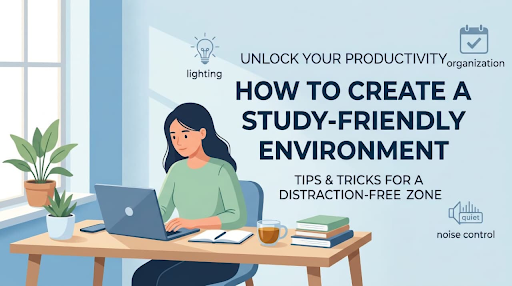
• Create a Dedicated Zone: If you must study at home, never study in your bed. Your brain associates your bed with sleep. Create a specific area in your room dedicated exclusively to work. When you sit in that chair, your brain will automatically know it is time to perform.
Manage Your Energy, Not Just Your Time
You are a human being, not a machine. You can have the best time management strategies in the world, but if you have zero energy, you will not get anything done. Prioritizing your physical and mental health is not a luxury; it is a fundamental requirement for academic success.
• Guard Your Sleep: Pulling all nighters is the absolute worst thing you can do for your productivity. Sleep deprivation destroys your memory, ruins your concentration, and lowers your immune system. Aim for seven to nine hours of quality sleep every single night. Treat your bedtime as a strict appointment that you cannot miss.
• Fuel Your Brain: You cannot expect a high performance brain to run on junk food. Eat nutritious meals rich in vitamins and healthy fats. Keep a water bottle with you at all times because even mild dehydration can cause brain fog and fatigue.
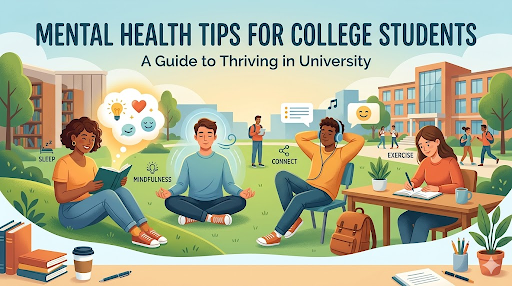
• Get Moving: Exercise is a powerful productivity tool. Physical activity increases blood flow to the brain, reduces stress hormones, and boosts your mood. You do not need to spend two hours at the gym. A brisk thirty minute walk around your neighborhood or campus is enough to clear your head and improve your focus.
• Practice Mindfulness: College life is incredibly stressful. Taking just ten minutes a day to practice deep breathing or meditation can significantly lower your anxiety levels and improve your attention span.
Tech Stack to the Rescue: Apps That Help
We live in a digital age, and technology can either be your biggest distraction or your greatest ally. Leverage these digital tools to streamline your busy student schedule.
• Note Taking Applications: Ditch the heavy notebooks. Use digital platforms like Notion, Evernote, or Microsoft OneNote to organize your lectures, assignments, and research in one searchable database.
• Focus Apps: If you lack self control when it comes to your smartphone, use applications like Forest. This app plants a virtual tree while you study. If you exit the app to check social media, your tree dies. It is a fun and surprisingly effective way to stay off your phone.
• Task Managers: Keep track of every single assignment, reading, and exam with tools like Todoist or Trello. Creating a central hub for all your academic and personal obligations ensures that nothing falls through the cracks.
Answer Engine Optimization: Frequently Asked Questions
When students search for help online, they want direct and actionable answers. Here are the most common questions regarding time management for college students, answered clearly and concisely to help you find exactly what you need.
What is the best productivity hack for university students?
The single most effective hack is combining time blocking with active recall. Plan exactly when you will study using a calendar, and during those study sessions, constantly test yourself rather than just rereading notes. This combination ensures you manage your time perfectly while maximizing memory retention.
How can a busy student stay productive every day?
Consistency is much more important than intensity. Building small, sustainable daily habits is the key. Create a solid morning routine, plan your day the night before, and aim to complete just three major tasks each day. By keeping your expectations realistic, you avoid burnout and maintain steady daily progress.
How do I balance a part time job and full time college studies?
Communication and aggressive scheduling are your best tools. Always communicate your academic needs to your employer in advance. Use every spare minute of your day. For example, use your commute to listen to educational podcasts or review flashcards. Treat your study time with the same level of respect and commitment as your paid work shifts.
How many hours should a college student study daily?
The quality of your study time is far more important than the quantity. Instead of tracking hours, track your progress on specific tasks. Generally, studying with intense focus for two to three hours using the Pomodoro technique will yield much better results than sitting in the library for eight hours while constantly checking your phone.
Conclusion
Navigating a busy student schedule is undoubtedly a massive challenge, but it is absolutely completely manageable when you are equipped with the right tools and mindset. By embracing time blocking, leveraging scientifically proven study methods like active recall, optimizing your geographic study locations, and fiercely protecting your physical energy, you can transform your academic experience.
Remember that productivity is a highly personal journey. What works perfectly for a fellow student might not work for you at all. Do not be afraid to experiment with these productivity hacks for students with a busy schedule until you find the exact rhythm that fits your unique lifestyle. Give yourself grace on the days when things do not go according to plan, celebrate your small victories, and keep pushing forward. You have the power to conquer your schedule, achieve your academic goals, and still have plenty of time to enjoy the incredible experience of being a student. Now close this tab, go tackle your most important task, and make today incredibly productive!
Need help making the right career decision?
Explore KickStartX career counselling and education guidance services for personalised support, scientific assessments, and structured career planning.
Explore related KickStartX services
Continue from this topic to the most relevant counseling, admission, abroad studies, skills, and career pathway pages.